
Acrocomia crispa
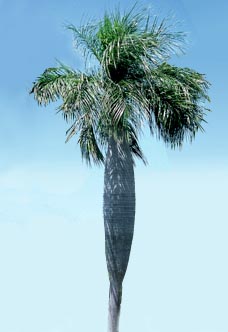
Family: Arecaceae Palm Tree
Common Name: Cuban Belly Palm
Scientific Synonymy:
Gastrococos crispa, Cocos crispa, Astrocaryum crispum, Gastrococos armentalis, Acrocomia armentalis
Common Synonymy:
Corojo palm
Cold Hardiness Zone: 10a View the UK and US zone maps
Acrocomia crispa Information
A solitary, tall, drought tolerant, moderately slow growing, monoecious palm. Rare in cultivation and locally common in the wild. It has a spiny, grey trunk, 18.3 m. (60 ft.) tall, 20-46 cm. (8-18 inch) diameter with spaced ring leaf scars, and large segmented, pinnate (feather) leaves, 3 m. (10 ft.) long, 1.5 m. (5 ft.) wide, dark green above and greyish green beneath.
This is the Cuban Belly Palm from Cuba, Gastrococos crispa, which has recently changed its name. It is a tall, spiny palm with a trunk that is slender at the base, but swollen in the middle, giving it the name "Cuban belly palm" in English. Locally common on calcareous soils within Semi-deciduous forest, Degraded scrub, and Savanna in Cuba.
Acrocomia crispa can tolerate close to freezing conditions. But low temperatures are best avoided, it will not tolerate any duration of dormancy and anything other than the briefest of cold snaps will surely kill a young plant. It naturally occurs in dry, arid, sun exposed, grassland locations, and should be planted to maximise Summer heat & sunshine exposure. Its roots will travel down to find water. Under cold conditions we recommend you keep this palm as dry as possible, which will usually mean constructing a glass or plastic roof over the plant to keep rain off, and supplemental heat provided over duration. Any cover placed over this palm during times of rain or during cold nights must be removed or vented during hours of sunshine or the plant could be severely heat stressed.
General Information
Distribution
Native to: Cuba